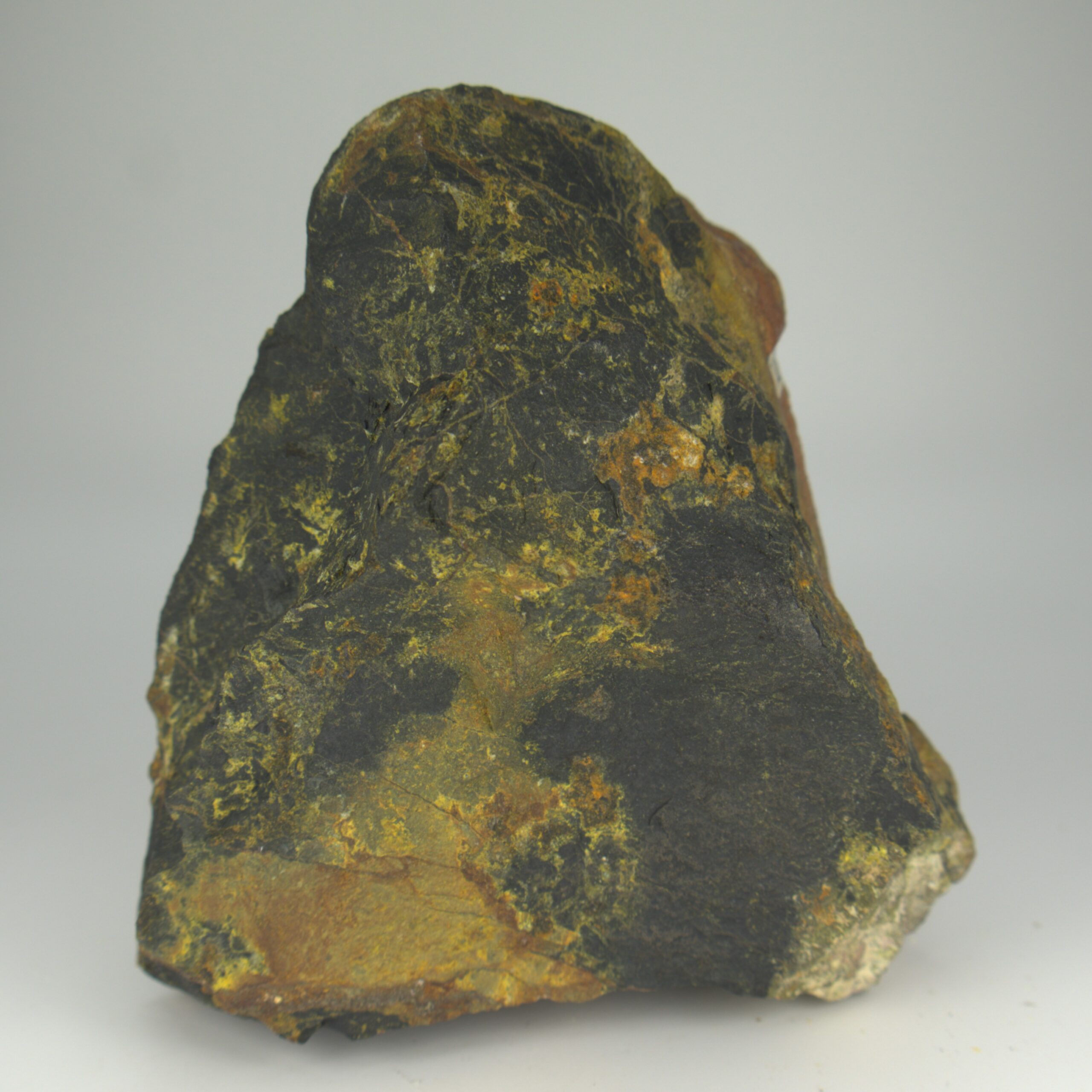
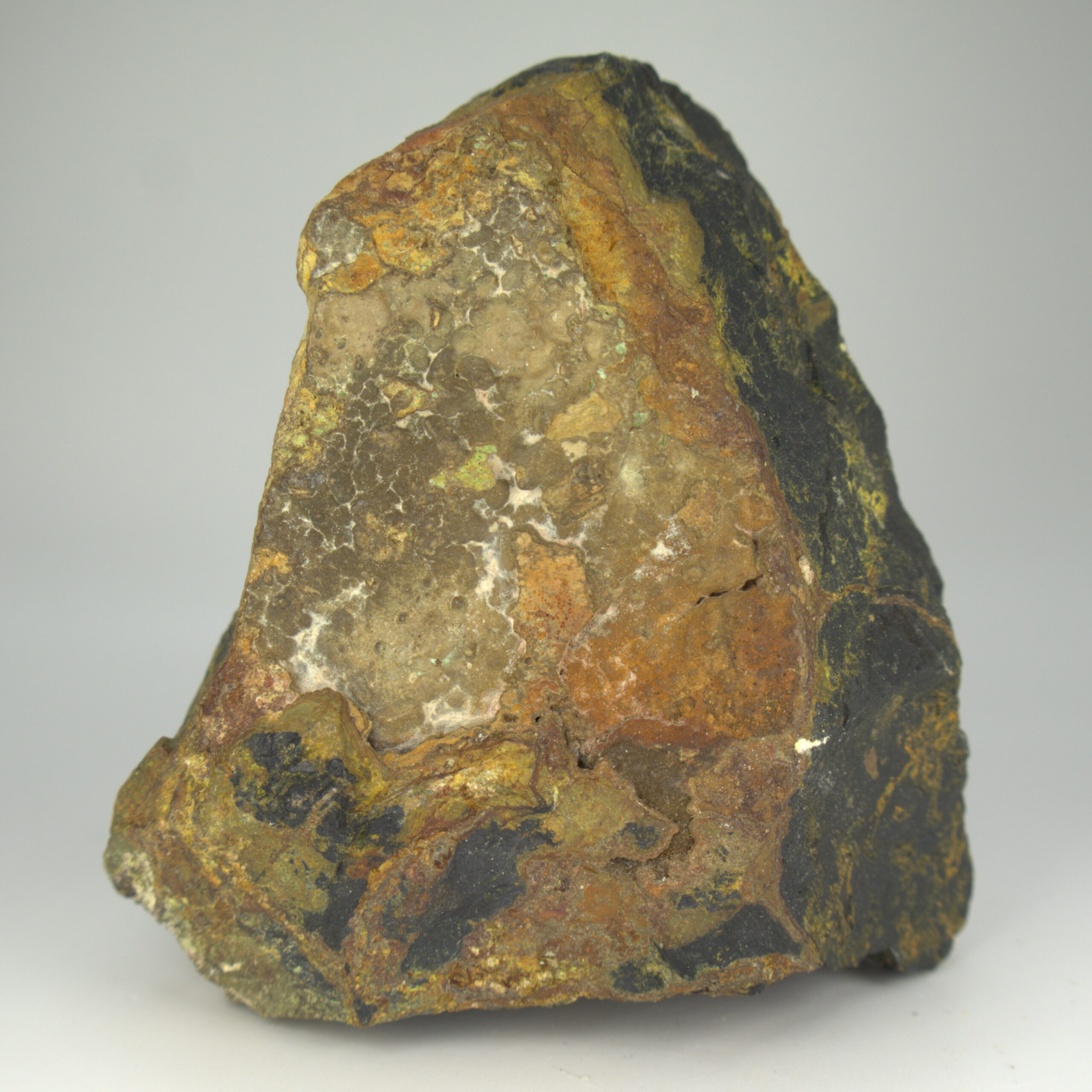
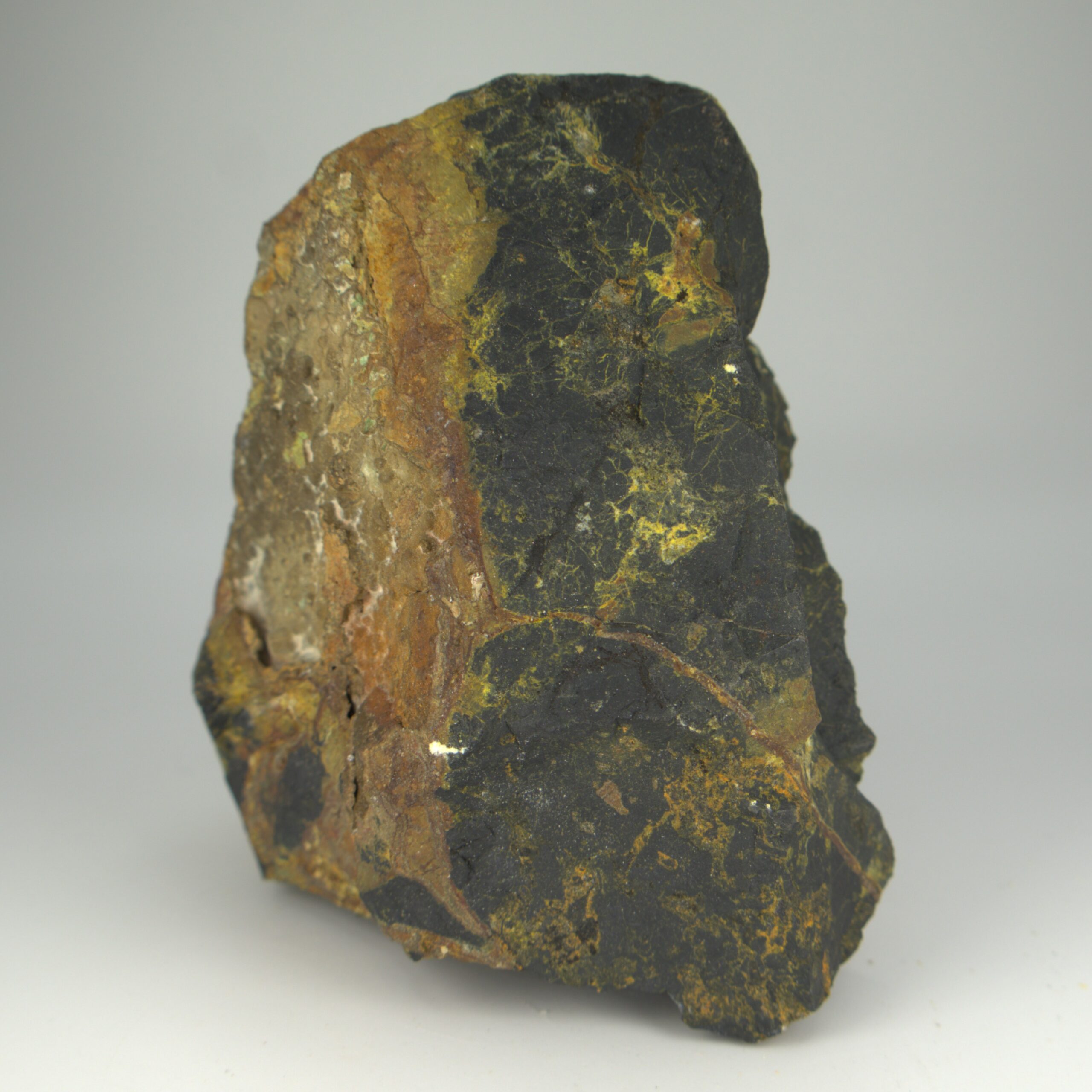
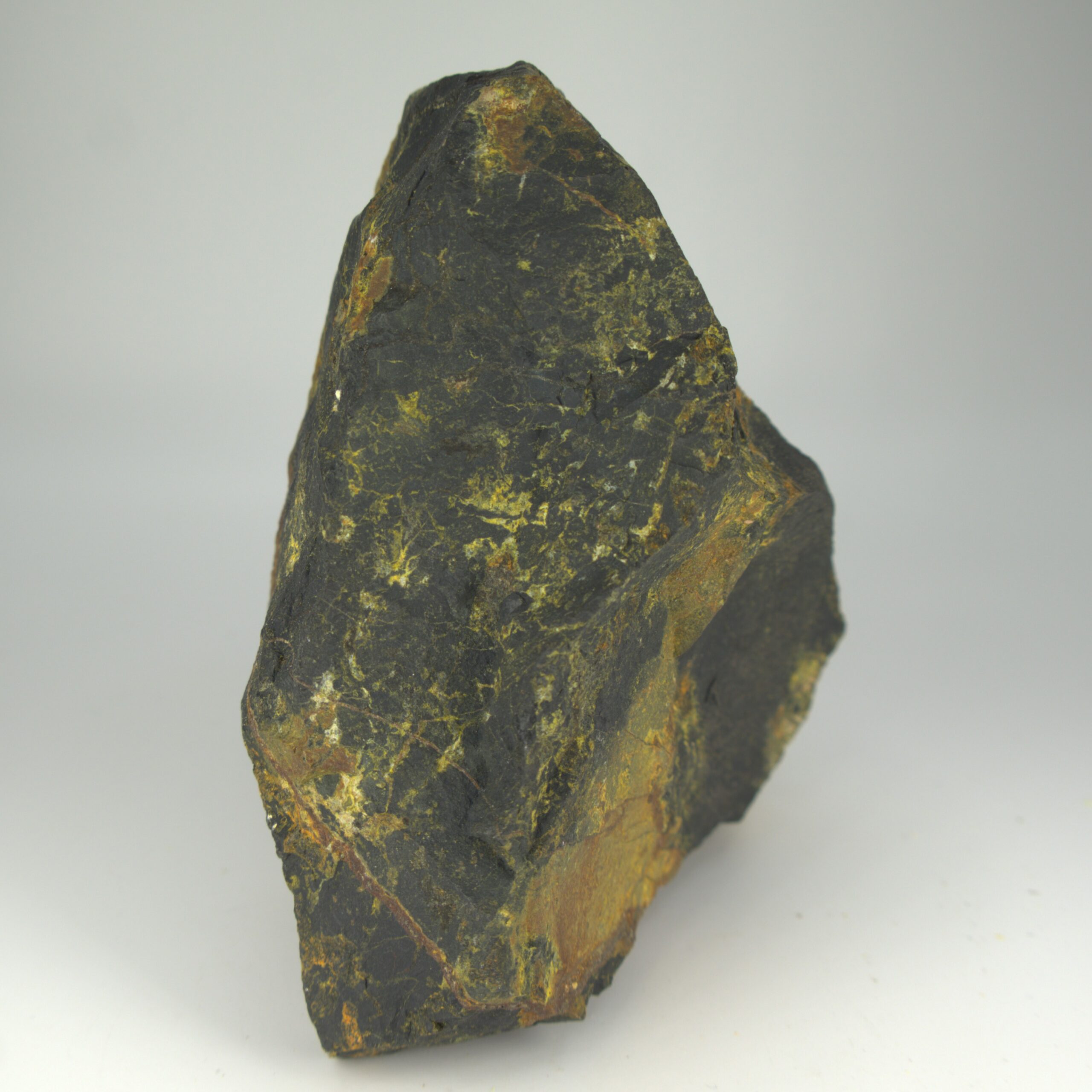
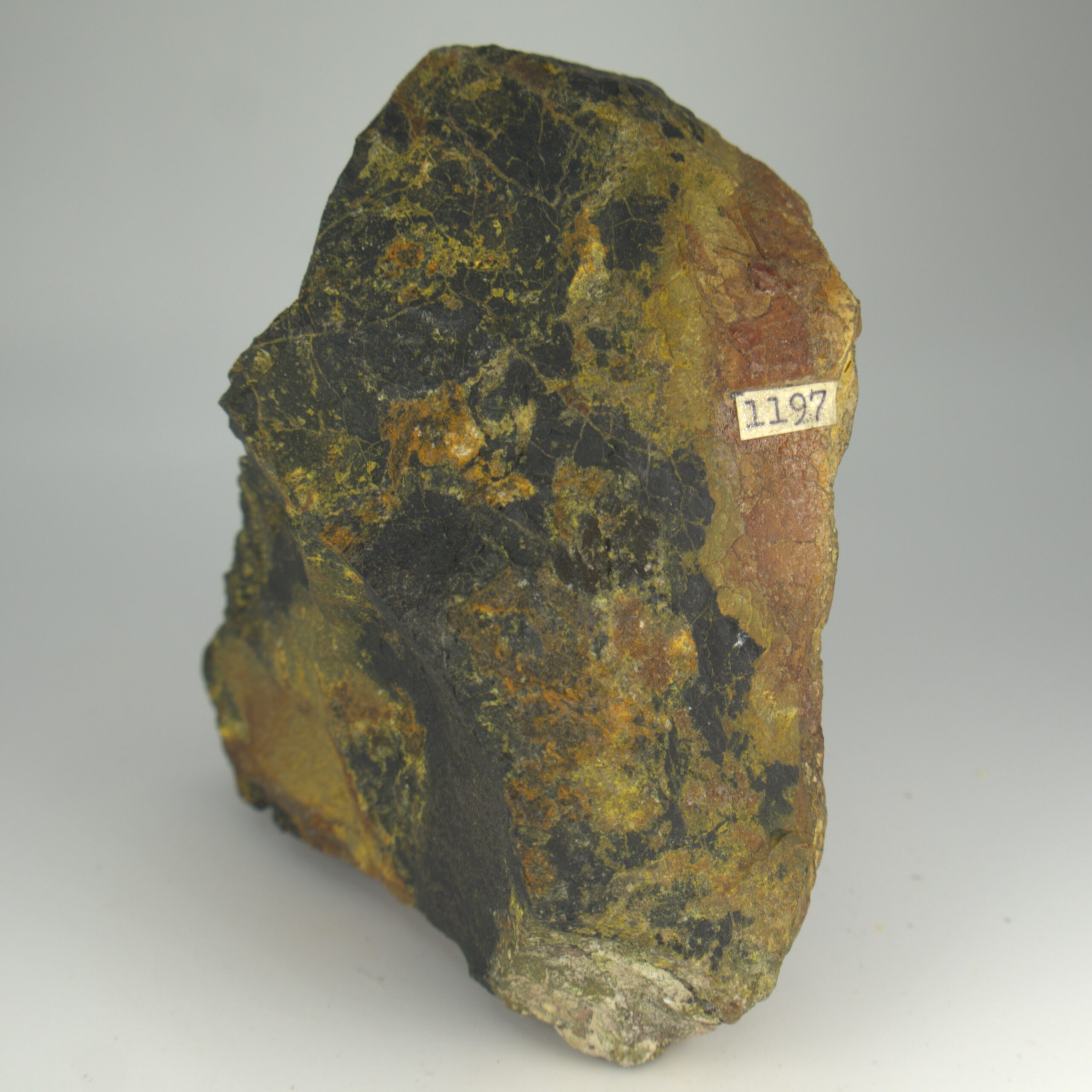
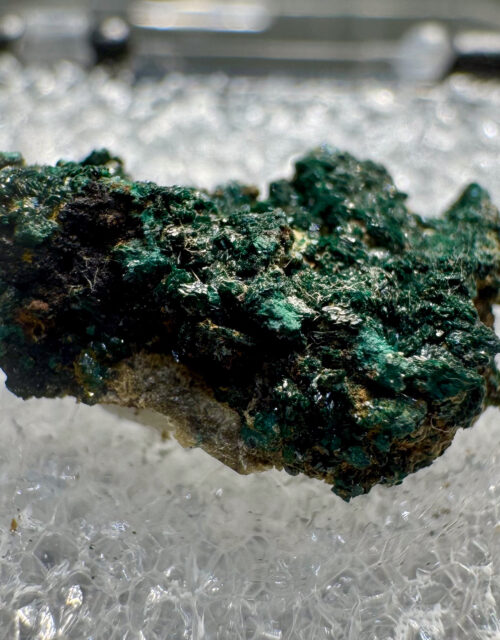
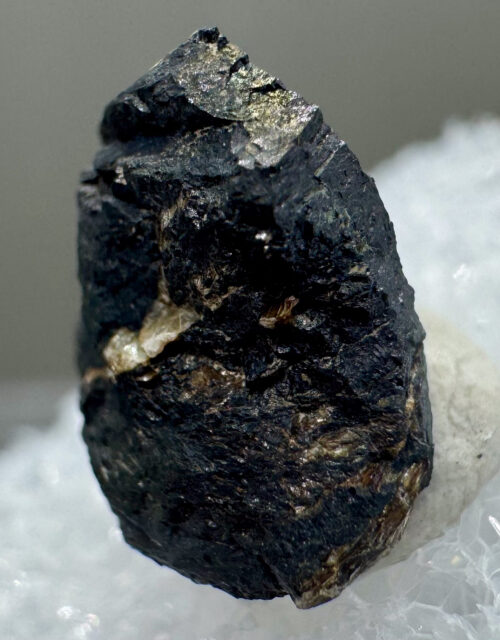
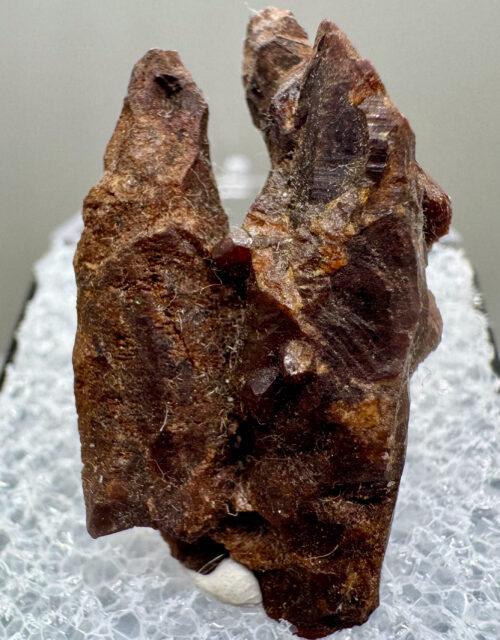
Species: Uraninite, Rutherfordine, Uranophane
Locality: El Sherana Mine, South Alligator River, Northern Territory, Australia
Dimensions: 9.6 x 9.0 x 5.4 cm., 930 grams
Ex. George Kamin Collection
Outstanding, large, historically-important specimen of solid, dense, very heavy uraninite with a thick crust of brown botryoidal rutherfordine on one face and some yellow uranophane from one of the world’s richest uranium minerals, the El Sherana Mine, South Alligator River, Northern Territory, Australia. From Mindat: “El Sherana was the largest producer of high-grade uranium ore amongst the mines along the South Alligator River valley, totalling 38,400 tonnes for El Sherana and 21,300 tonnes for El Sherana West mine. They were underground and open-cut operations.
The ore consisted of massive pods and disseminated veinlets of pitchblende, with secondary metatorbernite, autunite, gummite, and gold, with minor pyrite, galena, and chalcopyrite. The ore was hosted by the carbonaceous shale of the Koolpin Formation, within 45 metres of the contact with the unconformably overlying Carpentarian Sandstone.
A camp was constructed for these and nearby mines consisting of dongas for single men, and a few cottages for families. A gravity separation plant was constructed in 1956, 2 kilometres west of the camp. A 1992 inspection stated they were all in poor condition, and shortly after were dismantled and buried on-site.
The mine was a uranium producer with some gold and silver. It was discovered in 1954, by a team led by Joe Fischer. The mine name is a combination of a team member’s daughters’ names. It operated from 1954 to 1964, and the site rehabilitated across 1988 to 1992, leaving little but some bare ground. It was operated by United Uranium NL. In 1959 it purchased a former gold mining processing plant at Moline, 50 kilometres to the west and ore was trucked there to be processed.
In the 1980s, an exploration focus was made on El Sherana, Palette and Coronation Hill mines for gold, platinum, and palladium. These metals are found in haloes around the uranium mineralised areas. Opposition from local indigenous groups and conservationists prevented mining in what was by then the Kakadu National Park, which had expanded into the area.”
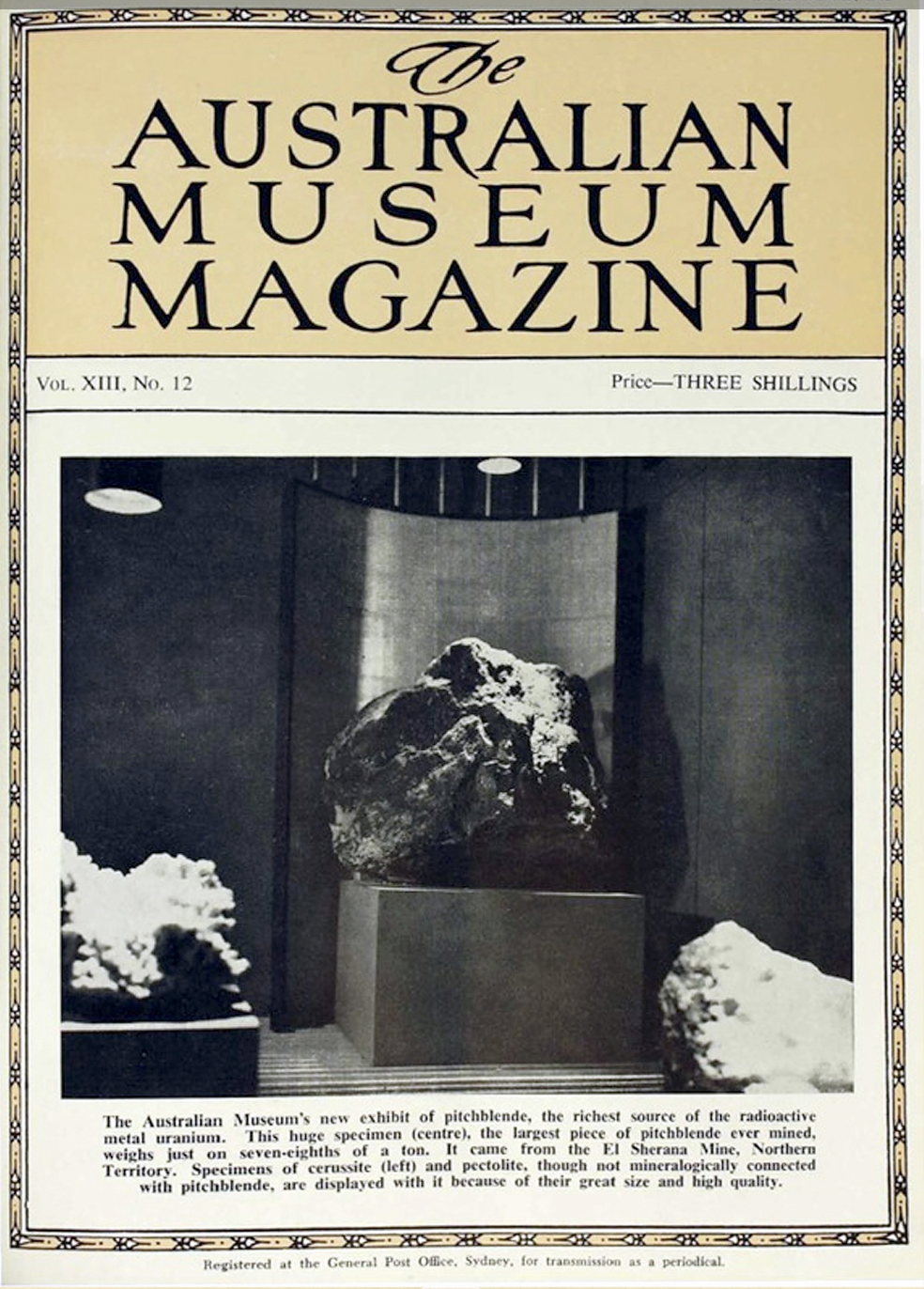
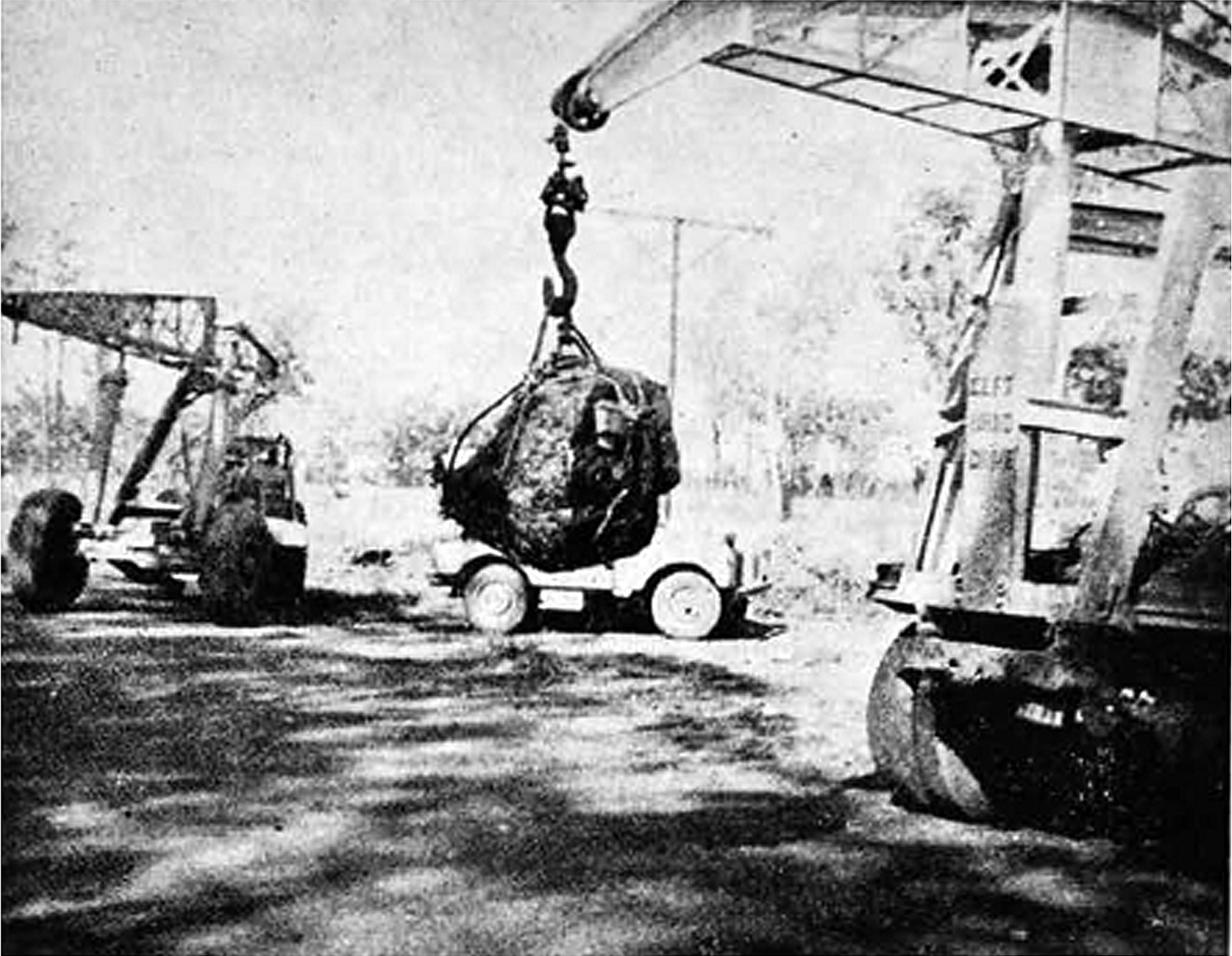
This specimen comes with a vintage circa 1950’s label from Ward’s Scientific, and measures over 170,000 CPM on my Ludlum Model 3 Counter with the 44-9 probe. I have attached several photos along with the specimen photos of the extraction (and display!) of a HUGE boulder of solid uraninite from this mine, one exhibit in the 1950’s at the Australian National Museum in Sydney (something that would never happen today for obvious reasons!). A real piece of “Atomic Age History” and a great specimen too. Rare!